Can enterprises control the AI Agents they're deploying?
July 23, 2026

Product demos move effortlessly these days. From one automated workflow to another, executives talk about digital tools with confidence, and every new system promises to reason, coordinate, and execute tasks, often suggesting that minimal human intervention will be needed. But once organizations spend enough time around these systems, a different reality begins to emerge: AI agents do not always behave with the consistency enterprises have traditionally expected from software.
An agent may complete a task one way on Monday and take a completely different route on Tuesday. A workflow can fail because the system interpreted a goal differently than expected. At the same time, permissions and actions begin expanding across connected tools. What makes these systems so powerful is also what makes them difficult to fully trust: their unpredictability.
In this fourth edition of Signal by AMPD Labs, we explore the growing gap between what enterprises expect from agentic AI and what these systems actually require once they become part of day-to-day operations. Much of the conversation today focuses on autonomy, productivity, and the promise of digital workforces. Those conversations are exciting, but they can also create the impression that deploying AI agents is simply another technology rollout. The reality is more nuanced.
AI agents introduce a different relationship between people and software. They make decisions, adapt to changing situations, and interact with other systems in ways that are not always predictable.
That flexibility is exactly what makes them valuable, but it also means organizations need a different operating model. Deploying capable agents is only part of the equation. Staying in control of them is what ultimately determines long-term success.
Over the last few months, agentic AI has become one of the dominant conversations in enterprise technology. NVIDIA envisions a future where AI agents become part of everyday enterprise operations, software platforms are redesigning their products around autonomous workflows, and a new generation of startups is emerging to solve a challenge that barely existed a year ago: keeping AI agents observable, governable, and under control.
At the same time, most organizations are still learning what it actually means to work with AI agents.
For many companies, the journey begins with AI as a productivity assistant, while the long-term vision is autonomous operations. From our perspective, moving from one to the other will become one of the biggest challenges organizations face over the coming years, especially for those not already experimenting with agentic AI.
Expectations vs. Reality
Deploying AI agents is only part of the challenge. As these systems become part of critical business operations, organizations also need the people, processes, and infrastructure to keep them reliable, observable, and under control.
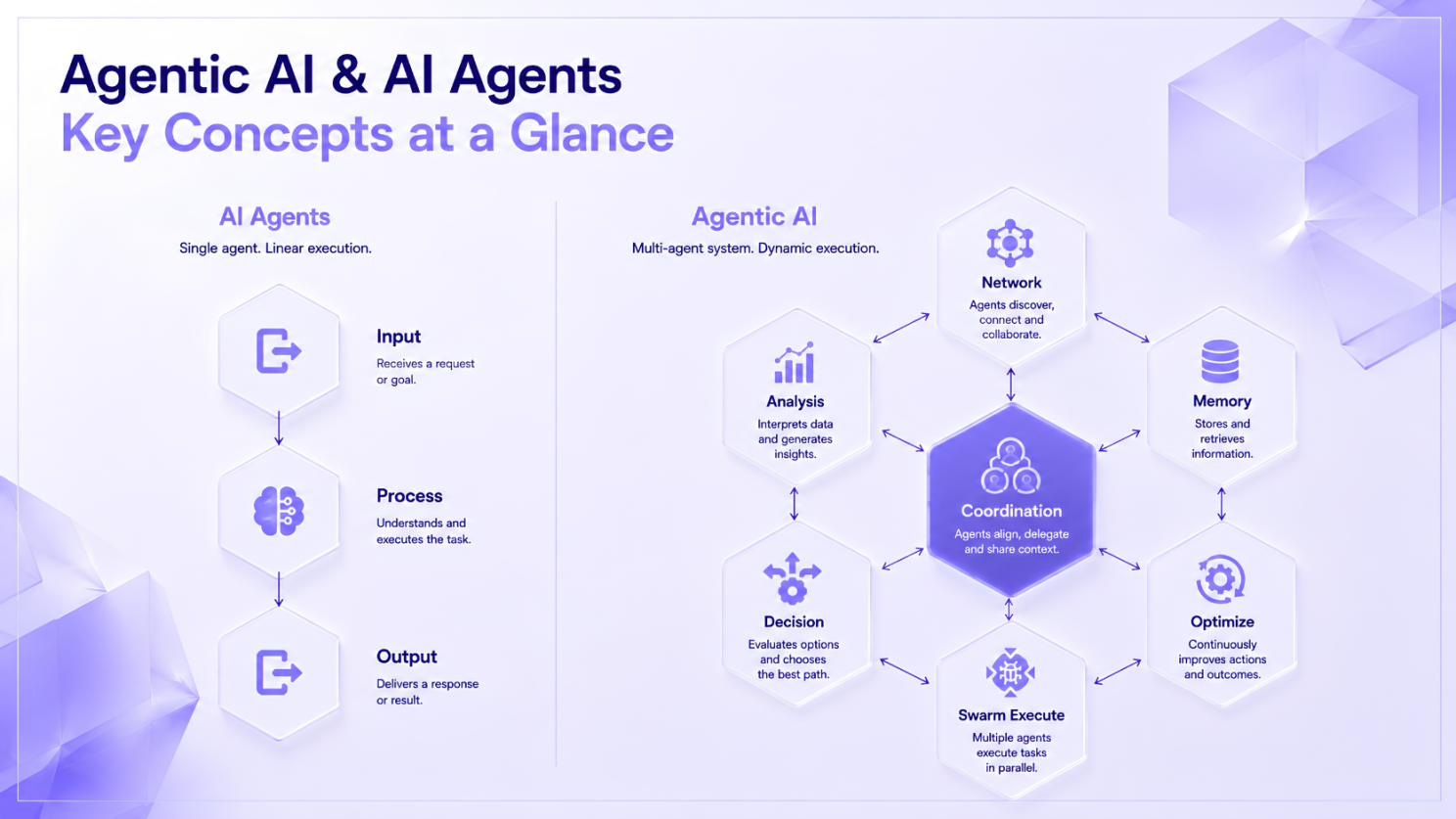
Unlike traditional AI agents that follow a linear request-and-response flow, agentic AI coordinates multiple capabilities simultaneously, including reasoning, memory, orchestration, and decision-making. That additional autonomy is what makes these systems more capable, but also more challenging to supervise inside enterprise environments.
AI agents aren't traditional software
Traditional software succeeds because it behaves consistently. Even highly complex systems generally follow deterministic logic, which means failures can be traced, reproduced, and understood. Agentic AI works differently. Rather than following fixed instructions, agents interpret objectives, decide how to approach them, and adjust their behavior based on context, available tools, memory, or changing priorities.
That unpredictability is not a flaw. It is what allows AI agents to navigate ambiguity, coordinate across workflows, and solve problems that traditional automation cannot. But it also means enterprises should not expect autonomous systems to behave with the same consistency as deterministic software.
Autonomy still requires oversight
Traditional AI responds to prompts. Agentic AI works toward objectives, often taking multiple steps and making decisions along the way. Once systems begin choosing their own sequence of actions, oversight can no longer happen only before deployment. It has to continue throughout the lifecycle of the system.
That creates a new challenge for enterprises. Teams begin depending on systems they cannot always fully explain, while leadership still expects the reliability associated with traditional software.
Governance is becoming the real product
This is where many enterprise conversations begin to change. The question changes from "How do we deploy AI agents?" to "How do we operate them responsibly?" Conversations around observability, orchestration, permission layers, auditability, and operational oversight are becoming central to enterprise AI strategy. Organizations need ways to supervise systems that continue acting independently after deployment. Governance is becoming part of the product itself rather than a separate compliance exercise.
This represents a broader structural transition in how enterprises relate to software altogether. For decades, software primarily existed as a tool that responded directly to human direction. Agentic systems blur that boundary by introducing technologies capable of operating with partial autonomy. Once software starts behaving this way, governance can no longer exist as documentation alone. It has to become part of the architecture itself.
So, can enterprises control the AI agents they're deploying? We believe they can. But control doesn't happen automatically. It comes from combining capable technology with the right operational structures, clear ownership, continuous oversight, and the expertise needed to adapt these systems over time.
Over the past year, we've noticed a clear change in the conversations we're having with enterprise teams. Early discussions focused on selecting models, identifying use cases, or experimenting with AI tools. Today, those conversations increasingly revolve around ownership, integration, governance, and long-term operation. Organizations are realizing that deploying an AI agent is often the easiest part. Operating it confidently six months later is where the real work begins.
That's why we see our role as more than implementing AI solutions.
Whether an organization builds an internal AI team or works alongside a technical partner, someone needs to continuously evaluate new models, refine workflows, monitor behavior, and ensure autonomous systems remain aligned with business objectives. Staying at the forefront of AI isn't just about adopting the latest technology. It's about building the capability to remain in control as that technology continues to evolve.
We believe the most valuable conversations are the ones that move beyond the hype and focus on what it actually takes to operate these systems responsibly. Here are two resources we think are worth exploring:
- The AI Agent Risk Nobody Is Ready For: This video explores one of the biggest tensions surrounding agentic AI: the balance between autonomy and control. Rather than focusing on sensational predictions, it explains why supervising AI agents becomes increasingly difficult as they gain access to more tools, data, and interconnected workflows. It's a thoughtful introduction to the operational challenges enterprises will need to solve as agentic AI moves into production.
- AI Agents and the Future of Autonomous Workflows: This conversation takes a practical look at how AI agents are evolving inside enterprise environments. It explores concepts like orchestration, multi-step reasoning, and execution chains, helping explain why traditional assumptions about software no longer fully apply to autonomous systems. If you're interested in understanding where enterprise AI is heading over the next few years, this is a great place to continue the conversation.
More soon.